Chapter 1: 1 - Knowing What It Really Costs to Live in Panama City When You Are 50 When I started to think about moving to Panama City at age 50, I thought this place would not cost a lot. I even hoped it would be cheap compared to living in the United States or Europe. Many people say Panama is where retirees can have a comfortable life and save some money. But soon I found out there is more to it. The cost of living in Panama City isn’t always the same. It changes based on what you want, what you like, and what is most important to you. Many people move to Panama because they hear about low costs and fun things to do. But, they often do not know at first that prices can change a lot. It depends on the way you want to live. If you choose to live in a small place with only simple things, you can save money. But if you want great water views or rich decor, you will have to pay much more for it. The real trick to knowing how much it costs to live in Panama is to see that the price is not...
Interview with SEO Hobby Expert, UniFi Protect All‑In‑One Sensor deep dive (movement detector, door sensor, Home Assistant integration)
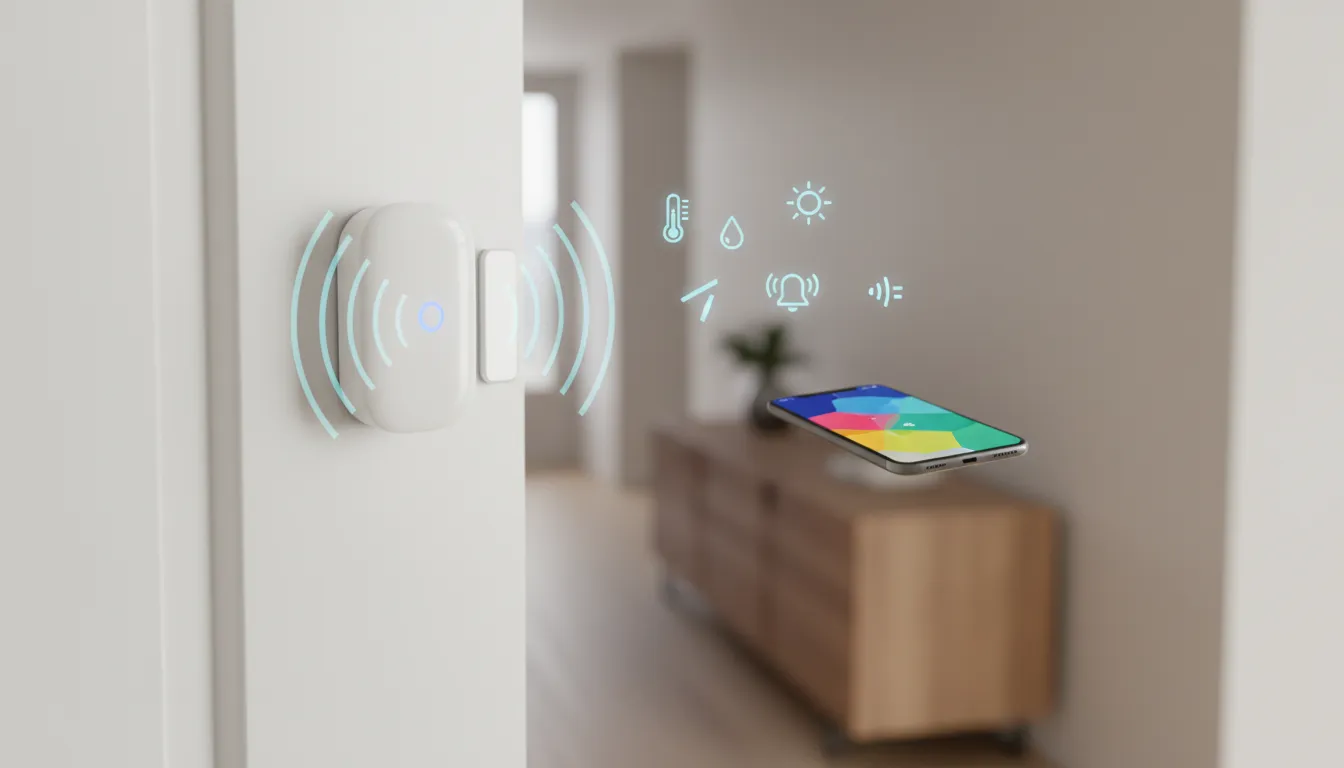
Can you give an overview of the UniFi Protect All‑In‑One sensor and why someone would choose it — especially for movement detector use?
Absolutely. The UniFi Protect All‑In‑One sensor is a compact, feature‑packed device designed to sit in the Protect ecosystem alongside your UniFi cameras and lights. Out of the box it combines a movement detector (motion sensor), a contact sensor for doors/windows, temperature and humidity sensors, an ambient light sensor, an accelerometer for tilt/garage detection, and even an optional alarm sound recognition feature that can detect certain UL alarm patterns. In my setup I treat it primarily as a movement detector and door sensor, but its multi‑sensor nature is what makes it compelling: you get several useful telemetry streams from a single tiny unit.
People choose this device for a few reasons: native integration with UniFi Protect (so it appears in the same NVR/UI with camera pairing options), the convenience of having multiple sensors in one package, and the ability to push those readings into Home Assistant for automation. If your goal is to deploy a reliable movement detector that also gives temperature, humidity, lux and door status without multiple devices cluttering walls, this is an attractive single‑device solution.
What exactly comes in the box and what are the physical characteristics?
The package is small — the sensor itself is a little capsule‑shaped device that weighs roughly 50 g without the battery. Inside the box you’ll find:
- The All‑In‑One sensor capsule
- A CR123A (3V) battery preinstalled
- A small tool for opening the back cover
- A magnet for the contact (door/window) sensor
- A corner/angled mount bracket
- Sticky pads and spare mounting strips
- Screws for a more permanent mount
- A quick‑start guide and QR code for adoption
Physically, the sensor is small and discrete. The magnet piece is separate and mounts on the door or window frame. The device is primarily designed for indoor use and is not rated for outdoor placement.
Which sensors are included, and what are their practical ranges and constraints?
It really is an all‑in‑one. The key sensors and practical notes:
- Movement detector (motion sensor) — effective up to about 5 m. Good for occupancy detection and presence‑based automations.
- Contact sensor (magnet) — used for doors and windows to report open/closed state.
- Temperature sensor — reports ambient temperature; nice accuracy (I saw two decimal points in Home Assistant).
- Humidity sensor — useful for environmental automations (HVAC, dehumidifiers).
- Ambient light (lux) sensor — handy for controlling blinds, lighting depending on natural light.
- Accelerometer — used for tilt/garage‑style detection and tampering detection.
- Alarm sound recognition — detects specific alarm sound patterns defined by UL standards (UL 217 and UL 2034); useful if you want the sensor to notify you when a conforming smoke or CO alarm goes off.
- Optional water/leak probe — available as an add‑on, but shipped only with certain bundles.
Two practical constraints to highlight: it uses Bluetooth to communicate with a UniFi U6 access point (it doesn’t use Wi‑Fi), so you need a compatible U6 AP configured as a Protect bridge. And it’s an indoor device — don't mount it outside or expect outdoor rated performance.
How do you physically mount it as a door sensor and set the movement detector placement?
I mounted mine on the door itself using the supplied double‑sided tape. The magnet sits on the door frame so when the door closes the contact sensor reads closed. A couple of best practices:
- Mount the capsule high enough so the movement detector has a clear view of the room (motion range is about 5 m).
- Level the magnet so it aligns with the sensor's magnetic window — UniFi provides guidance on gap distance (a few millimetres up to ~20 mm depending on orientation).
- If you want to use it primarily as a movement detector, place it in a position where it faces the primary area of interest rather than tucked behind furniture.
- Use the corner/angled mount if you need to aim the motion detection cone into the room for better coverage.
Mounting is fast: stick it up, align the magnet, and the device will power on and begin advertising for adoption. In my case a tab removed the battery isolation and it started blinking immediately — adoption was next.
Walk me through the adoption process into UniFi Protect — is it straightforward?
Yes, adoption into UniFi Protect is straightforward, provided you meet the prerequisite: a compatible U6 access point configured as a Protect bridge. The sensor uses Bluetooth Low Energy to talk to the U6 AP and then relays to Protect. Here’s the high‑level flow I followed:
- Remove the battery tab so the device starts advertising.
- Open UniFi Protect on the NVR (the Cloud Key Gen2+ or UniFi OS Console). Go to Devices → Add New Device (or the 'ready to add' list).
- Select the sensor and choose mounting location/type (door, window, garage, or leak probe).
- Decide which features to enable (movement detector, temperature/humidity, lux, alarm sound recognition). Be mindful that enabling more features increases battery usage.
- Pair the sensor with a camera if you want quick camera access from the sensor tile on the Protect dashboard.
- Apply configuration and allow the firmware update to finish. The sensor may update to the latest firmware during adoption.
The Protect UI walks you through safe ranges and motion detection areas. After adoption you’ll see the sensor in Protect with live readings (motion events, door open/close, temperature, humidity, lux values) and an activities feed that lists events like “door opened” and “motion detected.”
How does the movement detector behave in UniFi Protect — what do the activity logs look like?
In Protect the movement detector shows up as part of the sensor tile along with other sensor readings. The activities feed records events in chronological order: motion detected, door opened, door closed, tampering detected (if applicable). Each event is timestamped and visible in the Protect app and web UI.
Couple of observations from my test:
- Motion events show up quickly and reliably within Protect. You’ll see short motion detections and ongoing detection flags depending on movement persistence.
- Door open/close events are tracked with duration (e.g., “open for 9 minutes 9 seconds”) which is handy for understanding how long something stayed open.
- Protect’s UI shows light level, humidity and temperature alongside the movement detector activity which makes at-a-glance context very useful.
What information is available when you integrate the sensor with Home Assistant?
Integration is seamless via the UniFi Protect integration in Home Assistant. Once Protect has the sensor, Home Assistant discovers it as a UniFi Protect device and exposes multiple entities for each sensor reading. Example entities you’ll typically see in Home Assistant:
- Binary sensor: contact (open/closed) — for door/window state
- Binary sensor: motion (movement detector) — presence/motion status
- Sensor: temperature (°C with decimals)
- Sensor: humidity (%)
- Sensor: ambient light (lux)
- Sensor: battery level (%)
- Binary sensor: alarm sound detected (if enabled)
- Sensor: last motion timestamp, last open timestamp, tamper status
All of these let you build automations and dashboards in Home Assistant as you would with any other sensor. Note: Protect and the integration prioritize battery life, so some readings (like lux or temperature) may update less frequently depending on the configuration and how many sensors you have enabled.
How did you use the movement detector to automate blinds using Node‑RED and Home Assistant?
I used the ambient light reading (lux) from the All‑In‑One sensor as the trigger condition to close or open blinds in my office. The movement detector itself could also be used as a presence trigger, but for the blinds I relied on lux combined with a periodic check. The flow in Node‑RED was simple:
- A timed inject node triggers every 10 minutes to evaluate current lux.
- Read the entity state for the sensor's lux value in Home Assistant.
- If lux is below a threshold (e.g., 20 lux), close blinds; if above threshold, open blinds.
- Optionally add conditions to prevent repeated toggles (e.g., only act if current blind state differs from desired).
This approach works well because the sensor's lux reading is reliable enough to determine “it’s dark” vs “it’s bright” and the movement detector can be layered on top if you want presence‑aware behavior (only close blinds if nobody is home, etc.).
What about battery life — what can users expect when using the movement detector and other sensors?
Battery life depends on what features you enable. Out of the box the CR123A battery is rated for about a year under typical use, according to UniFi, but enabling everything (movement detector, alarm recognition, frequent lux updates) will reduce that expectancy. In Protect the UI you can watch the estimated battery percentage and the system will show an approximate battery life based on current configuration.
Some tips to extend battery life:
- Disable alarm sound recognition if you’re not using it — it consumes extra power.
- Reduce the frequency of updates you rely on (e.g., you don't need lux every minute for most automations).
- Place the sensor where Bluetooth connectivity to the U6 AP is strong to avoid retransmissions that reduce battery life.
Are there any quirks or limitations you discovered, especially related to the movement detector?
A few practical limitations to be aware of:
- Bluetooth range matters. The sensor talks to a U6 AP via BLE. If the AP is far away or has poor signal, you’ll see weaker connection reports in Protect and potentially delayed events. That affects the movement detector responsiveness.
- Update cadence and battery conservation can mean some sensors refresh less frequently in Home Assistant. For example, lux values might be delayed by a few minutes depending on energy settings.
- The alarm sound recognition expects specific UL alarm patterns and certain distance and environment considerations; it’s not a universal “detect any loud noise” alarm.
- It’s an indoor sensor. Don’t expect it to be weatherproof or suitable for outdoor placement.
- Price point — in some regions the sensor is significantly more expensive than typical single‑purpose IoT sensors, so cost per feature is something to evaluate.
How is the sensor priced, and is it worth it compared to cheaper alternatives?
In the US the sensor retails around $59 USD. In other regions, like Australia, I’ve seen it priced much higher (I noted ~AUD 140), which makes the value proposition less clear. The market has many inexpensive IoT sensors that provide temperature, humidity, and motion for considerably less money. However, for buyers who prioritize ecosystem integration, build quality, single‑device consolidation, and unified management under UniFi Protect, the All‑In‑One sensor makes sense.
So, is it worth it? If you already run UniFi Protect, have a U6 AP and want tight integration and a compact movement detector plus environmental sensing without adding separate devices and bridges, then yes — it’s worth considering. If you’re building a low‑cost distributed sensor network and price is the only driver, cheaper sensors exist but may lack the convenience and polish of a single Protect‑native unit.
What are the most useful automations you've built with this device?
Here are a few automations I found valuable:
- Blinds control based on lux: Close blinds when the movement detector/lux reading shows it’s dark, open when bright.
- HVAC safety: If the door sensor shows the door is open and the heater or air‑con is on, turn the HVAC off to save energy.
- Presence lighting: Use the movement detector to turn lights on/off in low‑traffic rooms.
- Guest/occupant reminders: If a door remains open for a long duration (captured by the contact sensor), send a notification to take action.
- Camera pairing: When motion (movement detector) triggers, automatically open the paired camera in your dashboard or start a short recording clip (Protect handles the video side).
How responsive is the movement detector for presence detection versus other motion sensors?
The movement detector is responsive within its 5 m range and works well for basic presence detection. It’s not a high‑speed PIR meant for security alarm systems where millisecond response matters, but for occupancy, automation and convenience use cases it performs reliably. For tighter requirements (security grade detection or outdoor motion), dedicated security sensors or cameras with analytics are a better fit.
Are there any recommended placements or strategies to get the best performance from the movement detector?
Yes. To maximize effectiveness:
- Place it at a height and angle that gives the movement detector a clear view of the room or doorway you want to monitor.
- Use the angled mount to aim the detection cone if the doorframe placement limits coverage.
- Avoid pointing it at heating vents or direct sunlight that could affect the temperature sensor readings.
- Keep it indoors and within good Bluetooth range of a U6 access point to maintain stable communication.
- If you want accurate lux readings for automated blinds, place it where natural light falls rather than in a permanently shadowed corner.
What troubleshooting tips would you give if the movement detector isn’t reporting correctly?
If you see missed motion events or no reporting, try the following:
- Check the battery level in Protect — low battery can reduce reporting frequency.
- Verify Bluetooth signal strength to the U6 AP in the Protect device details. Move the AP or the sensor closer if connection is weak.
- Confirm the sensor firmware is up to date — firmware updates occur during adoption and sometimes immediately after.
- Disable features you’re not using (like alarm recognition) to see if the reporting frequency improves — this can affect perceived responsiveness due to battery/power tradeoffs.
- Re‑adopt the sensor: remove it from Protect and add it again after a full power cycle if it behaves erratically.
How does the sensor’s movement detector integrate with camera pairing in Protect and what are the benefits?
When you pair the sensor with a camera in Protect, the sensor tile on the Protect dashboard offers a shortcut to the paired camera. That pairing provides context: if movement detector triggers, you can instantly view camera footage of the area. The main benefits are:
- Faster situational awareness — from an event you can jump to the video feed.
- Simpler UI — sensor and camera data in the same ecosystem without cross‑platform setups.
- Combined automation possibilities — e.g., movement detector triggers can be used to start camera recording or snapshot capture in Protect.
Does the movement detector support advanced analytics or only basic motion detection?
The All‑In‑One sensor provides basic PIR motion detection — a movement detector that reports presence and movement. It’s not a camera, so it doesn’t do person/vehicle/face analytics. If you need classified detections (person vs animal), you’ll want to rely on UniFi cameras with video analytics, and use the movement detector as a complementary trigger or redundancy for indoor occupancy sensing.
In Home Assistant, do sensor updates appear instantly and are they reliable for automations?
Once Protect reports values, Home Assistant pulls them through the UniFi Protect integration. Events like motion and door open/close are pushed into Protect and exposed in Home Assistant. In my experience motion events and contact changes are timely and reliable. Some sensor readings like lux or temperature may update slower depending on battery conservation settings and the sensor’s reporting cadence.
What would you change about the all-in-one sensor if you could?
Some improvements I’d love to see:
- Lower regional pricing — the device is pricey in some markets which hurts adoption.
- Optional Wi‑Fi fallback for environments where BLE coverage is limited (while keeping power efficiency).
- More granular update frequency control from Protect so users can balance battery life and reporting cadence per sensor.
- Packing the leak probe as an optional standalone purchase so single buyers can add water detection without buying a 3‑pack bundle.
Table of Contents
- Practical quick reference: settings and decisions to make during setup
- Automation ideas using the movement detector
- Cost vs benefit summary
- Final verdict
- FAQ
- Parting advice
Practical quick reference: settings and decisions to make during setup
When you adopt the sensor, Protect will ask you to make a few choices. Here’s a quick cheat sheet of what to consider:
- Mount type: door, window, garage, leak probe — pick the one that best matches your use case for correct behavior.
- Enable motion detection (movement detector) if you need presence events or occupancy automations.
- Enable temperature/humidity/lux if you plan to automate HVAC, blinds, or dashboards.
- Enable alarm sound detection only if you have UL‑compliant alarms and need that integration; otherwise disable to save battery.
- Pair a camera if you want easy jump to a video clip from the sensor tile in Protect.
Automation ideas using the movement detector
- Close blinds when lux < 20 and movement detector indicates no one present for X minutes.
- Turn off heater/AC if door contact is open and HVAC is on for > 2 minutes.
- Turn on lights when movement detector triggers and ambient lux < threshold.
- Send notification if door is left open for > 5 minutes (useful for energy saving and security).
- Use movement detector with presence sensors for guest room automation (e.g., lights, music, comfort controls).
Cost vs benefit summary
Pros:
- Multi‑sensor consolidation reduces wall clutter and simplifies maintenance.
- Native Protect integration means simple adoption and unified management.
- Exposed to Home Assistant, enabling powerful automations and dashboarding.
- Good build quality and multiple mounting options.
Cons:
- Pricey in some markets — may be twice the US price depending on region.
- Bluetooth dependency requires a U6 AP as a bridge, so additional hardware may be needed.
- Indoor use only and not meant to be a security camera replacement for advanced analytics.
Final verdict
If you run UniFi Protect and have a U6 AP, the All‑In‑One sensor is a tidy, convenient device that combines a movement detector with environmental sensing and door contact in a single neat package. It’s easy to install, quick to adopt, and shows up cleanly in Home Assistant for automations. The main barrier is price in some regions — if that’s not an issue, then for many smart home setups it’s an excellent option for consolidating multiple sensors into one device.
FAQ
Is the UniFi All‑In‑One sensor weatherproof and usable as an outdoor movement detector?
No. The All‑In‑One sensor is designed for indoor use only. It’s not weatherproof and should not be exposed to the elements. For outdoor movement detector needs, choose a weatherproof motion sensor or use UniFi cameras with outdoor analytics.
Does the movement detector require a UniFi U6 access point?
Yes. The sensor communicates to UniFi Protect via Bluetooth Low Energy and requires a compatible U6 access point (U6‑Pro, etc.) to act as the BLE bridge. Without a U6 AP configured for Protect, the sensor cannot be adopted.
How long does the battery last if I enable all features including the movement detector and alarm detection?
Battery life varies by usage and enabled features. UniFi rates the CR123A battery for about a year under typical use. Enabling everything (movement detector, frequent lux/temperature updates, and alarm recognition) will shorten battery life. Protect shows battery percentage so you can monitor and plan replacements.
Can the movement detector detect pets or small animals?
The movement detector is a passive infrared (PIR) sensor meant to detect motion in a general sense. Small pets may or may not trigger it depending on distance, movement type, and sensitivity. If pet immunity is important, consider placement or using camera analytics with person detection rather than a PIR movement detector.
Will the All‑In‑One sensor appear in Home Assistant automatically?
Yes. Once adopted into UniFi Protect, Home Assistant’s UniFi Protect integration will discover the sensor and expose entities for motion, contact, temperature, humidity, lux, battery, and others. You can then use these entities in automations and dashboards.
Does the movement detector support pairing to a camera for event‑driven recording?
Yes. In Protect you can pair the sensor with a camera so that from the sensor tile you can jump to the paired camera. Protect can use sensor events to trigger captures and recordings depending on your Protect settings.
How accurate is the temperature reading from the All‑In‑One sensor?
Temperature readings are reasonably accurate and reported with decimal precision in Home Assistant. As with any small sensor, placement matters: avoid placing it near vents or in direct sunlight for best ambient temperature reporting.
What lux threshold should I use for blind automation with the movement detector?
Common starting points are 15–30 lux for “dark” conditions indoors, but it depends on your home and preferences. In my setup I tested thresholds like 20 lux and adjusted after observing behavior. Use a timed evaluation (every 5–10 minutes) and combine with motion detection if you want presence‑aware behavior.
Is the alarm sound detection practical for everyday smoke alarms?
Alarm sound detection targets specific UL alarm patterns (UL 217 for smoke and UL 2034 for CO). It can be practical if the local smoke/CO alarms conform to those standards and are within the proximity and volume thresholds. It’s not a generic “loud noise” detector and may not detect alarms that don’t match those patterns.
Parting advice
If you want one device that offers a movement detector, contact sensor, temperature, humidity and lux sensing all managed inside UniFi Protect — and you already have the required U6 AP — the UniFi Protect All‑In‑One sensor is worth a close look. It simplifies installations, reduces the number of battery devices to manage, and integrates naturally into Home Assistant for automations like blinds, HVAC safety, and presence lighting.
If you’ve got a specific use case — blinds automation, garage tilt detection with the accelerometer, or a movement detector placement question — ask and I’ll share the exact config and Node‑RED flow snippets I used.
Mindfulness & stress resources for tech projects
Working through firmware updates, adoption issues, and long automation sessions can be unexpectedly stressful. Short Mindfulness exercises and simple break routines can help you stay focused and reduce troubleshooting errors.
If you travel with hardware or do on-site installs, these quick tips on Travel mindfulness make setup days less draining and more productive.
Below are practical reads to pair with long setup sessions and to help maintain a calm, productive workflow:
-
Beginners guide — a quick intro to mindfulness for those new to the practice.
-
Integrating technology — how to use tech to support mindfulness without adding stress.
-
Understanding mindfulness — approaches for anxiety and focused work.
-
Environment affects — tips to optimize your workspace and reduce distractions while configuring devices.
-
Dive into mindfulness — reflective practices to sustain attention during long projects.
-
Mindfulness education — applying mindfulness principles to learning and teaching, useful if you train others on your smart‑home setup.
Keeping your mind calm makes technical work smoother — feel free to bookmark any of these while you manage your UniFi Protect integrations and automations.
Comments
Post a Comment